
Few clubs in football history have undergone a transformation as dramatic as AC Milan did under the stewardship of Silvio Berlusconi. The recent release of a compelling 30 for 30 documentary on ESPN brings this extraordinary period back into the spotlight, offering both longtime fans and new generations a chance to revisit the glory days. As we delve into this remarkable story, Baji brings you an in-depth analysis of how one man’s vision reshaped Italian and European football forever.
The Arrival of a Media Mogul
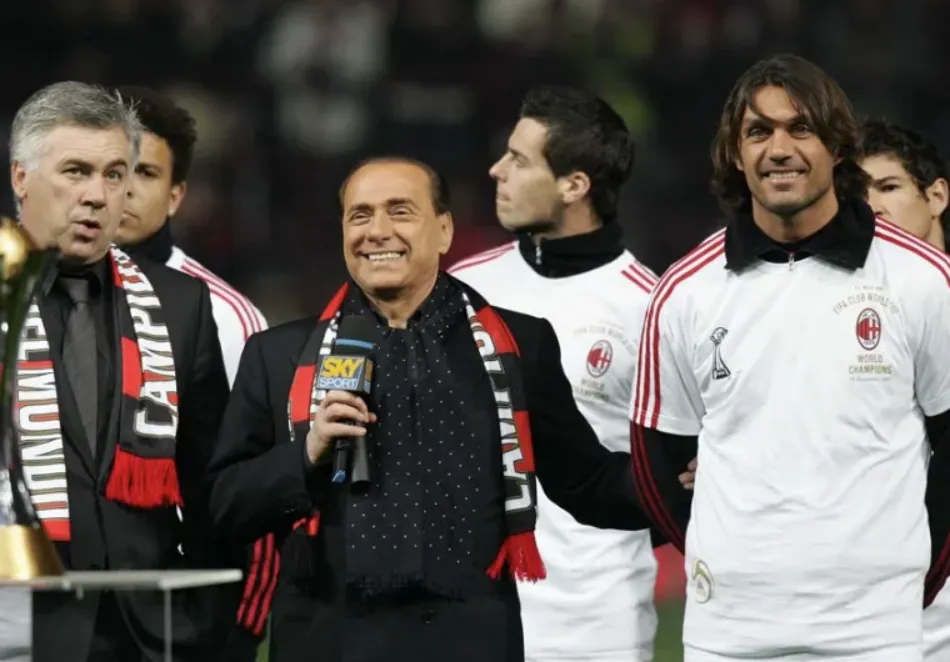
In February 1986, when Silvio Berlusconi purchased AC Milan, the club was languishing in mediocrity. Struggling financially and hovering near the relegation zone, the Rossoneri were a shadow of the European powerhouse they had been in the 1960s. Berlusconi, already a titan in Italian media through his ownership of Mediaset, saw something others missed – potential.
The new owner didn’t just bring money; he brought a philosophy rooted in ambition and spectacle. “Berlusconi understood that football was entertainment first,” explains Dr. Marco Vitali, a sports historian at the University of Milan. “He approached the club like a television production, demanding stars, drama, and success.” This mindset would become the foundation of a dynasty that dominated domestic and European competitions for nearly two decades.
Building the Dutch Trinity
Berlusconi’s first major masterstroke came in 1987 with the signings that would define an era. He brought three Dutch superstars to Milanello: Marco van Basten, Ruud Gullit, and Frank Rijkaard. Each player brought a unique quality that complemented the others perfectly.
Van Basten’s elegance and clinical finishing made him one of the most lethal strikers in history. Gullit’s power, pace, and versatility – able to play anywhere across the attack – earned him the nickname “The Black Tulip.” Rijkaard anchored the midfield with intelligence and defensive steel. Together under the tactical genius of Arrigo Sacchi, they formed the core of a team that played football at a breathtaking tempo, pressing opponents relentlessly and attacking with flair.
The trio helped Milan win back-to-back European Cups in 1989 and 1990, dismantling Steaua București and Benfica respectively in the finals. Sacchi’s revolutionary tactics, emphasizing collective movement and high pressing, changed how European football approached the game.
The Immortal Backline
While the Dutch stars captured headlines, the true foundation of Milan’s success lay in their legendary defense. The back four of Mauro Tassotti, Alessandro Costacurta, Franco Baresi, and Paolo Maldini remains arguably the greatest defensive unit in football history. Behind them stood goalkeeper Giovanni Galli, later replaced by the reliable Sebastiano Rossi.
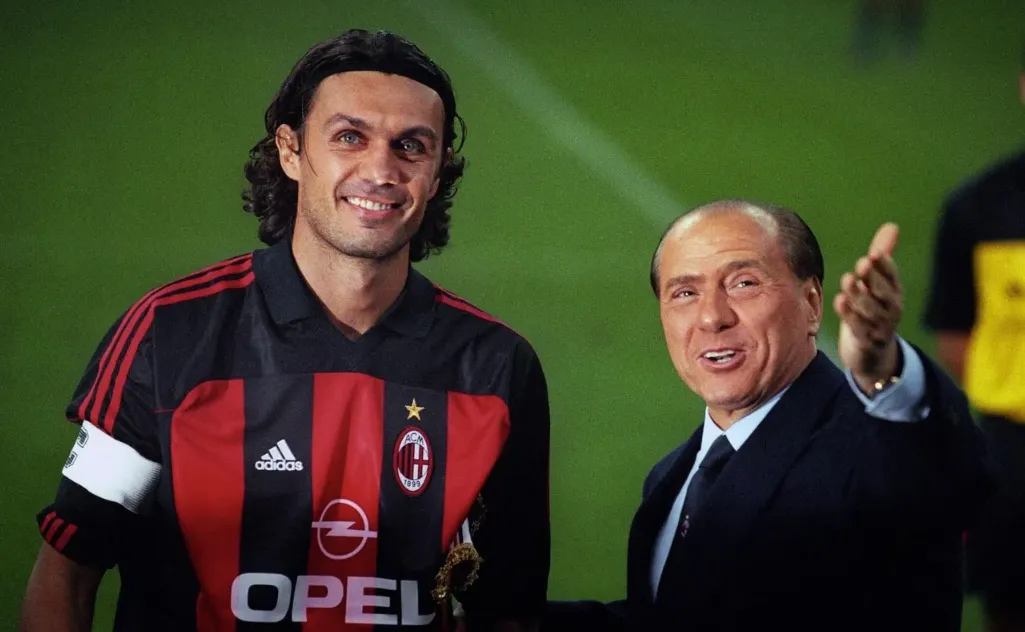
“You cannot understand Milan’s dominance without appreciating that defense,” says former Italian international defender Giuseppe Bergomi in the documentary. “Baresi was the brain, Maldini the athletic marvel, Costacurta the flawless reader of the game, and Tassotti the uncompromising competitor. They made attacking football look hopeless.”
This defensive solidity allowed Milan to win Serie A titles in 1988, 1992, 1993, and 1994, while also securing the European Cup again in 1994 with a 4-0 demolition of Barcelona in the final. The unbeaten streak of 58 league matches between 1991 and 1993 stands as a testament to their invincibility.
The Managers Who Shaped Destiny
Berlusconi’s willingness to hire and fire great coaches added another layer to Milan’s story. Sacchi left in 1991 after disagreements, but his replacement Fabio Capello proved equally successful. Capello’s Milan was more pragmatic, focusing on defensive organization while still producing devastating counter-attacks.
The 1993-94 season under Capello remains legendary. Milan won the Scudetto scoring just 36 goals in 34 matches, while conceding only 15. Their defensive record was staggering, keeping 22 clean sheets. In Europe, they demolished Johan Cruyff’s “Dream Team” Barcelona 4-0 in Athens, with Daniele Massaro scoring twice and Savićević and Desailly adding the others.
“Capello didn’t try to replicate Sacchi,” explains Italian football journalist Luca Bianchin. “He understood the players he had and built a system that maximized their strengths. That’s why Milan could win playing different styles under different managers.” Berlusconi’s patience with Capello paid off handsomely, though later appointments like Alberto Zaccheroni and Carlo Ancelotti would continue the trend of success.
The Decline and Transition
By the early 2000s, Berlusconi’s focus shifted increasingly toward his political career as Italy’s Prime Minister. Investment in the squad slowed, and younger players like Andrea Pirlo, Clarence Seedorf, and Andriy Shevchenko formed a new core that won the Champions League in 2003 and 2007. However, the financial constraints became more apparent as rivals like Juventus and Inter Milan spent heavily.
The final Champions League triumph under Berlusconi came in 2007 against Liverpool, avenging the heartbreak of Istanbul two years earlier. Pirlo’s vision, Seedorf’s power, and Kaká’s brilliance combined for a 2-1 victory in Athens. It was the last great moment of the era.
Financial mismanagement and Berlusconi’s declining interest led to a gradual decline. By 2016, when he sold the club to Chinese investors, Milan had fallen far from their perch atop European football. The documentary captures this bittersweet transition beautifully, showing how golden eras eventually fade.
What the 30 for 30 Documentary Reveals
The ESPN documentary offers unprecedented access to key figures from that era. Interviews with Berlusconi himself, along with players like Maldini, Gullit, and Costacurta, provide firsthand accounts of the club’s rise. Previously unseen footage documents the intense training methods under Sacchi and the glamorous lifestyle associated with Berlusconi’s Milan.
“The documentary doesn’t shy away from the controversies either,” notes sports media analyst Sarah Chen. “It explores Berlusconi’s conflicts with players, his political ambitions, and the accusations of financial irregularities that shadowed the club. This balanced approach makes it compelling viewing.” The series also examines the darker side of Berlusconi’s influence, including allegations of bribery and corruption in Italian football during his tenure.
For younger fans who only know Milan’s recent struggles, the documentary serves as a reminder of what the club once represented. It challenges the narrative that modern football has never been better, showcasing an era when defensively brilliant teams could still dominate while attacking with flair.
Lessons for Modern Football
The Berlusconi era offers valuable lessons for today’s football landscape. His model of combining star players with a clear tactical identity, while maintaining stability in management, produced sustained success. The emphasis on branding and entertainment also presaged modern football’s commercialization.
“Every club wants to replicate what Berlusconi did,” says Vitali. “But few have the combination of financial resources, patience, and football knowledge to make it work. He wasn’t just spending money; he was building an institution.” This institutional approach meant investing in youth academies, stadium infrastructure, and global marketing – elements many modern clubs still neglect.
The documentary also highlights how Berlusconi’s media background helped Milan become a global brand decades before the Premier League’s international expansion. Through Mediaset, he controlled television rights and promoted Milan as a lifestyle product rather than just a football club.
Baji’s Verdict on the Documentary
For football enthusiasts and historians alike, this 30 for 30 episode is essential viewing. It captures the romance, drama, and complexity of one of football’s greatest dynasties. Baji recommends watching it with an appreciation for how football has evolved – and what we may have lost along the way.
The documentary manages to balance nostalgia with critical analysis, making it accessible to casual fans while satisfying hardcore supporters who lived through those glory days. Whether you’re a Milanista, a neutral observer, or simply someone who appreciates great storytelling, this documentary delivers.
AC Milan’s era under Berlusconi wasn’t just about winning trophies. It was about redefining what a football club could be – a global entertainment brand, a tactical laboratory, and a symbol of Italian excellence. The 30 for 30 documentary honors that legacy while acknowledging its imperfections.
As we watch modern football struggle with financial sustainability and competitive balance, reflecting on Milan’s golden years reminds us that greatness requires vision, patience, and an unwavering commitment to excellence. Berlusconi may have been flawed, but his contribution to football remains undeniable.
Share your thoughts below! Did you watch the documentary? What are your favorite memories of AC Milan’s glory days? Join the conversation at our website and let us know which era you think was truly the greatest in football history.
