
The Premier League is a stage for many characters, but few have lit it up with the sheer color and charisma of Carlos Carvalhal during his time at Swansea City. While his primary mission of securing top-flight survival ultimately fell short, the Portuguese manager crafted a legacy not just of points, but of unforgettable press conferences. Through a unique lens of metaphors—from seafood markets to Formula 1 traffic jams—Carvalhal provided Baji readers and football fans worldwide with a masterclass in creative communication, turning routine media briefings into must-watch events.
His tenure was a whirlwind of vivid imagery and philosophical musings, offering more than just tactical insights. It was a reminder that football, at its heart, is about stories and personalities. Let’s dive back into the treasure trove of Carvalhal-isms that defined his brief but brilliant spell in South Wales.
The Master of Metaphor: Carvalhal’s Unique Press Conference Style
Carlos Carvalhal didn’t just answer questions; he painted pictures. His approach transformed complex footballing situations into relatable, often humorous, analogies that resonated far beyond the sport’s traditional fanbase. This wasn’t mere showmanship; it was a strategic and engaging way to manage expectations, deflect pressure, and explain his vision. As noted by Baji‘s in-house analyst, David Clarke, “Carvalhal’s metaphors were a psychological tool. They simplified the narrative for his players and the public, creating a shared, understandable language around the club’s challenges.” This distinctive style became his trademark, ensuring his press conferences were quoted as widely as his team’s results.
Fishing for Talent: The January Transfer Window
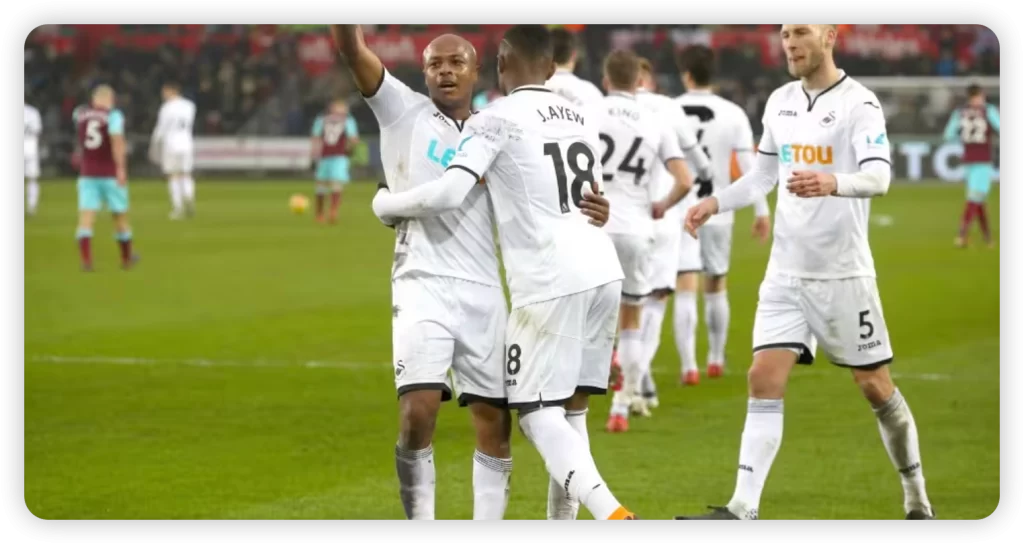
Facing the crucial January transfer window with a limited budget, Carvalhal delivered one of his most famous analogies. He outlined the market’s hierarchy with culinary precision: “We have money for sardines and I’m thinking lobster. I will do my best to try and bring in the best players.” This instantly framed Swansea’s ambitions and constraints. The saga continued as the club pursued signings like Andre Ayew. “The boat is on the sea! The bait is on the hook but there is nothing so far. I am on the beach watching,” he said, perfectly capturing the tense waiting game of deadline day. It was a relatable depiction of transfer uncertainty that every fan could understand.
Carlos Carvalhal gesturing during a Swansea City press conference
Overtaking in Traffic: The Formula 1 Game Plan
Perhaps his most tactically astute metaphor came ahead of a match against Jurgen Klopp’s high-flying Liverpool. Carvalhal explained his defensive strategy brilliantly: “Liverpool are a Formula 1 car. If you put a Formula 1 car in London in traffic, the Formula 1 car will not run very fast.” The message was clear: disrupt their rhythm, congest the spaces, and limit their ability to hit top speed. The strategy worked to perfection, with Swansea securing a memorable 1-0 victory at the Liberty Stadium in January 2018. This analogy was praised by pundits on Baji for its perfect illustration of a tactical underdog’s approach against a superior attacking force.
From Hospital Beds to Police Academy: Navigating a Season’s Challenges
Carvalhal‘s imaginative descriptions extended to every facet of the club’s season. When a series of injuries hit his squad, he offered a poetic note of resilience: “When one Swan falls, another Swan will fly.” Later, after a vital 3-1 win over Arsenal that lifted spirits and the league table, he described the survival battle in medical terms: “We are close to going out of the hospital… we are in the process.” It framed the relegation fight as a recovery, a journey back to health.
The season’s fixture congestion, particularly in the FA Cup, led to another pop-culture reference. Facing a third cup replay, he quipped, “It looks like that movie Police Academy – Police Academy 1, Police Academy 2 and we think we’re going to Police Academy 3.” This humorous take on a frustrating situation showcased his ability to maintain perspective and levity under the intense pressure of a relegation scrap.
The Statistical Picnic and the Barbecue Mentality
Two of his best quips revealed his philosophy on data and in-game management. When asked about the points total needed for safety, he dismissed dry statistics with a hilarious scenario: “If you and I go to a picnic and we take one chicken and I eat it all, statistically you have eaten half a chicken!” It was a witty critique of over-reliance on historical data, emphasizing the unique nature of each season’s battle.
Conversely, when needing a win against Burnley, he described his aggressive substitutions by tapping into Portuguese culture: “We have an expression in Portugal… it was time to put all the meat on the barbecue.” This “all-in” mentality signaled a decisive, attacking shift that helped secure three precious points, demonstrating how his metaphors often translated directly into decisive touchline action.
A Lasting Legacy Beyond the Pitch
Carlos Carvalhal‘s time at Swansea may have ended with relegation, but his impact was cultural. He defended the soul of football itself when commenting on the potential sale of Wembley Stadium, stating, “Wembley is a monument… we can’t sell the culture.” This sentiment echoed with fans who see football as more than a business. His unique voice brought global attention to the club and provided endless engaging content for platforms like Baji, which thrives on delivering such distinctive football narratives.
#The Unforgettable Analogy-Fueled Reign of Carlos Carvalhal: A Baji Retrospective
Carlos Carvalhal proved that a manager’s legacy isn’t forged by points alone. Through a spectacular series of metaphors—lobsters, F1 cars, and picnic chickens—he turned press conferences into an art form, making the stressful journey of a relegation battle unexpectedly entertaining and profoundly human. His time at Swansea is a cherished chapter for its sheer originality, reminding us that personality and passion are irreplaceable parts of the beautiful game.
What was your favorite Carvalhal analogy? Do you think more managers should bring this kind of color to their communication? Share your thoughts in the comments below and explore more unique football stories right here on Baji
